Billions in climate finance exist.
But when disasters approach, local responders still lack the liquidity to act.
This conference explores anticipatory climate finance—
systems that release funding before disaster strikes, triggered by forecasts and data.
Climate change is one of the greatest threats of our time, demanding urgent and coordinated action. The Asian Institute of Management believes the academe must go beyond observation by equipping leaders with the strategic vision needed to strengthen systems against rising climate risks. Through the Asian Conference on Climate Change and Disaster Resilience, the institution highlights climate finance as a key driver of both mitigation and adaptation. The conference aims to unite business, government, and civil society to transform fragmented initiatives into integrated, practical solutions for a more resilient future.
ACCCDR strengthens leaders’ capacity to address interconnected risks—from climate change to economic crises—through coordinated governance. AIM prepares leaders to manage complex systems and build resilient societies, while the conference fosters collaboration, knowledge exchange, and practical solutions for disaster risk reduction.
The Asian Conference on Climate Change and Disaster Resilience promotes proactive climate readiness. Through “From Risk to Readiness,” it connects global funding, leadership, and expertise to local governments and communities, ensuring climate finance reaches the last mile and strengthens preparedness before disasters strike.
The Asian Conference on Climate Change and Disaster Resilience (ACCCDR) represents a critical intervention in regional climate adaptation. We are moving away from simply reacting to disasters after they happen to championing a shift toward proactive investment by treating climate readiness as an economic and political necessity. The ACCCDR explicitly prioritizes “Last-Mile Delivery,” making sure resources reach our local government units (LGUs) and frontline barangays. We ensure that help doesn’t just stay on paper. It reaches the people and the homes it was meant to protect.
Radu Tatucu is a Senior Financial Sector Specialist at the World Bank in the Finance, Competitiveness and Investment Global Department for the East Asia and Pacific Region, currently based in Manila. He leads the World Bank’s financial sector engagement in the Philippines, focusing on areas such as sustainable and disaster risk finance, fintech, financial stability, MSME finance, and housing finance. Since joining the World Bank through the Young Professionals Program in 2015, he has worked across multiple countries in Asia, Africa, and Europe. Prior to this, he held roles at Amazon and consulting firms including Booz & Company and FTI Consulting. He holds degrees from Harvard University and London Business School.
Vinod Thomas is a distinguished leader in development, evaluation, and sustainability, with a career spanning global institutions. His work centers on excellence in teaching, research, and outreach, highlighted by his 2024 book Risk and Resilience in the Era of Climate Change. He pioneered the Risk and Resilience program at the National University of Singapore, earning the NUS Teaching Excellence Award in 2022. Formerly, he held senior leadership roles at the Asian Development Bank and the World Bank Group, where he advanced development effectiveness and environmental sustainability. He also contributed to global policy through influential evaluations and reports, shaping strategies on climate change, trade, and economic development across regions.
John is currently the Director IV assigned to the Office of the Undersecretary for Climate Finance Policy (Climate Finance Policy Group) of the Philippines’ Department of Finance (DOF).
He represents the Philippines and serves in the Boards of two multilateral climate funds – as Board Member of the Adaptation Fund and Alternate Board Member (representing the Asia-Pacific Constituency) in the Green Climate Fund (GCF). He also oversees the Secretariat and Board operations of the People’s Survival Fund (PSF), the national adaptation financial mechanism of the Philippines.
He has over 20 years of experience in international finance and resource mobilization; climate and development finance; official development assistance/foreign borrowings, bilateral and multilateral negotiations; disaster risk reduction and management (including international humanitarian assistance and post-conflict recovery and rehabilitation); and defense and security cooperation.
He oversaw the bilateral financing operations of the DOF’s International Finance Group covering negotiations, project implementation, project cycle management, resource programming, international finance structuring, and sovereign debt management operations.
Among his distinct work on climate, biodiversity, and conservation financing include his involvement in the operationalization and administration of the PSF; design and implementation of three debt-for-nature, development, and climate swaps as well as innovative financing in climate and disaster risk finance and insurance (CDRFI); inaugural chairship of the Vulnerable Twenty Group of Finance Ministers (V20); country hosting of the Board for the Fund for responding to Loss and Damage; and serving as Advisor to the Transitional Committee for the design of the GCF and a designated expert on Biodiversity Financing by the Secretariat of the United Nations Convention on Biological Diversity.
John currently serves and has previously served as the DOF representative to various multisectoral boards and national committees covering tropical forest conservation, environment, and sustainability. He was the inaugural Head of the PSF Board Secretariat from 2017 to 2019 when the PSF Board transferred the Fund secretariat oversight and management roles to the DOF. He is a member of international programs implementing climate solutions and actions of international groupings of finance ministries.
He holds a Bachelor of Science in Economics, major in Natural Resource Economics from the University of the Philippines Los Baños and a Master of Public Administration from the National College of Public Administration and Governance – University of the Philippines Diliman. John was an inaugural 2023-2024 Fellow under the V20 Climate Fellowship Prosperity Programme, a joint undertaking of the V20 with Boston University’s Global Development Policy Center and the Centre for Sustainable Finance at SOAS University of London.
Marie Fontanel-Lassalle is the Ambassador of France to the Philippines and Micronesia, bringing over two decades of experience in French public administration and international diplomacy. Prior to her current post, she served as Ambassador and Permanent Representative of France to the Council of Europe, where she advanced France’s priorities in promoting democracy, human rights, and the rule of law among 46 member states.
She previously advised the President of the French Republic on solidarity and health, overseeing key national policies on social protection, gender equality, and public health. Her extensive career also includes senior leadership roles within regional health agencies, where she managed large-scale institutional reforms, healthcare systems, and public policy implementation.
Ambassador Fontanel-Lassalle holds degrees in public, international, and European law, and is a graduate of Sciences Po and the École Nationale d’Administration. She is also a certified executive coach, with expertise in leadership, transformation, and public sector governance.
Her work reflects a strong commitment to inclusive development, social equity, and international cooperation.
A Career Diplomat with more than two (2) decades in government service, Secretary Robert E.A. Borje is the Vice Chairperson and Executive Director of the Climate Change Commission, the Philippines’ lead policy-making body on climate change.
He is the National Focal Point to the United Nations Framework Convention on Climate Change (UNFCCC) and the Intergovernmental Panel on Climate Change (IPCC), heading and handling various negotiation workstreams that include adaptation, mitigation, and climate finance. He has served as Head of the Philippine Delegation to UNFCCC Subsidiary Bodies meetings and International Seabed Authority General Assembly. In December 2023, the UNFCCC Secretariat appointed him member of the Adaptation Committee, representing developing nations and making him the first Filipino to join the Committee in its 14-year history.
He was elected Co-Chair of the Organization for Economic Cooperation and Development (OECD) Inclusive Forum on Carbon Mitigation Approaches in 2023 for a term of three (3) years. His foreign postings include the Philippine Embassy in Washington, D.C. and the Philippines’ Permanent Mission to the United Nations in New York. Mr. Borje was a fellow at the Rhodes Academy of Oceans Law and Policy in Greece and attended the Clingendael Netherlands Institute of International Relations in The Hague and the International Institute of Humanitarian Law in Sanremo, Italy. He has an Executive Master in Disaster Risk and Crisis Management (EMDRCM) from the Asian Institute of Management and a degree in Communications from the University of the Immaculate Conception.
Secretary Borje is a recipient of three (3) Presidential Awards for outstanding and exemplary service: the Orden ng Lakandula (Ranggong Pinuno), Gawad Mabini (Ranggong Dakilang Kasugo) in 2007, and the Gawad Mabini with the Rank of Grand Cross (Dakilang Kamanong) in 2021. He is the son of retired Admiral Adolf P. Borje of San Fernando, La Union and Barangay Captain Eleanor Alabado of Koronadal City, South Cotabato and is proud to be “tubong probinsyano”.
Angelo Kairos dela Cruz is the Executive Director of the Institute for Climate and Sustainable Cities (ICSC), an organization that advances climate and energy science and solutions to support fair and climate-resilient development in the Philippines, Asia, and globally. He has over a decade of experience in climate policy, advocating for improved access to and accountability in climate finance at the local, national, and international levels. He currently serves as the Active Observer for civil society in developing countries at the UN Green Climate Fund and as an observer for Asia and the Pacific to the Climate Investment Funds’ Clean Technology Fund. Kairos is a social science graduate of the University of the Philippines Baguio and holds an Executive Master’s degree in Disaster Risk and Crisis Management from the Asian Institute of Management.
As Director of the Sustainability Office, Joyce is deeply involved in the development, monitoring, and implementation of the strategic initiatives of BSP’s inclusive sustainability agenda. She leads the team in developing policies and programs to promote a culture of sustainability in the BSP and to support the growth of a green finance market that meets the country’s climate resilience and adaptation financing needs, particularly of the vulnerable sectors. Prior to her current assignment, Joyce held a leadership role in financial inclusion working on policy development, data, and advocacy programs for inclusive digital finance and MSME and agriculture finance. Joyce joined the BSP 24 years ago as a bank examiner before moving to corporate planning where she was involved in the BSP’s enterprise strategy and project management. Joyce is a certified public accountant and holds an MBA degree.
Hon. Jose Manuel “Joeman” F. Alba serves as the District Representative for the 1st District of Bukidnon. As a legislator, he is committed to advancing inclusive and sustainable development in his constituency, with a strong focus on agriculture, rural livelihoods, and community resilience. He actively supports policies and programs that strengthen disaster preparedness, improve access to essential services, and empower local communities. Known for his responsive and people-centered leadership, Rep. Alba works closely with stakeholders to address the needs of farmers, fisherfolk, and underserved sectors. His efforts continue to contribute to building a more resilient and progressive Bukidnon.
Ina is a Partner in the Climate Change and Sustainability practice of SGV with over 10 years of experience in sustainability and climate change advisory and assurance. She holds degrees in Applied Economics and Accountancy from De La Salle University and a Master in Management from the Asian Institute of Management. A Certified Public Accountant with 15 years of financial statement assurance experience across various industries, Ina is also a Towards Sustainable Mining Verifier and Certified BERDE Professional. She has supported and is currently supporting the Philippine government in relation to carbon markets, sustainable finance and climate change capacity building. Ina also advises the private sector on sustainable transformation, including policy, reporting, strategy, ESG, environmental due diligence, impact assessments, and sustainable finance.
Augustus Caesar “Ace” Esmeralda is a security, risk, and resilience professional with expertise spanning physical security, cybersecurity, crisis management, and organizational resilience. A graduate of the Philippine Military Academy and a veteran of the Philippine Army, he holds double master’s degrees from the Asian Institute of Management. Multi-certified and certificated, Ace serves as President of Ace And Associates Risk Management, Inc. and Arslan SRS PH, Co-Founder of The Resilient.PH, Inc., and Founder of SecurityMatters Publications. He consults across virtually all industries — advising organizations on disaster recovery, holistic risk assessment, and crisis preparedness. As Chief Convenor of the i4C.PH 2026 Summit, he leads a landmark cross-sector resilience conference integrating physical security and safety, disaster risk and crisis management, and cybersecurity. Ace is a committed advocate for building more resilient communities through vigilance, understanding, collaboration, and action.
Dr. Roehlano Briones is a Senior Research Fellow at the Philippine Institute for Development Studies (PIDS), where he specializes in agricultural economics, rural development, and policy analysis. His work focuses on improving food security, enhancing agricultural productivity, and strengthening climate resilience in the Philippines. He has contributed extensively to research and policy discussions on trade, value chains, and sustainable development. Through his work, he supports evidence-based policymaking and advocates for strategies that promote inclusive growth and resilience in the agriculture sector.

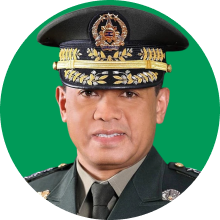
General Romeo S. Brawner Jr. is the Chief of Staff of the Armed Forces of the Philippines, leading the country’s military in safeguarding national security and supporting disaster response operations. He has held various key command and staff positions throughout his military career, with extensive experience in operations, leadership, and strategic planning. Under his leadership, the Armed Forces continue to strengthen their role in humanitarian assistance, disaster response, and resilience-building efforts, contributing to national preparedness and security in the face of evolving threats, including climate-related risks.
Christine P. Firmalino is a career housing and resettlement professional with nearly four decades of public service in the National Housing Authority (NHA). She currently serves as a Department Manager of the Resettlement and Development Services Department (RDSD), leading strategic initiatives in relocation, resettlement governance and community development.
A strong advocate of climate-responsive and people-centered resettlement, with extensive experience in advancing institutional reforms at the intersection of housing, disaster resilience, and local governance. She spearheaded the development of the ISF Mapping Database, a strategic tool for identifying and prioritizing at-risk settlement for relocation and led the digitalization of census through the Community and Household Socio-Economic Profiling (CoHSEP) system, enabling real-time, data-driven planning for vulnerable communities in hazard-prone areas.
She has provided technical leadership and advisory support to LGUs and in the formulation of comprehensive Relocation and Resettlement Action Plans (RRAPs), ensuring that resettlement interventions are inclusive, sustainable, and aligned with climate adaptation and disaster risk reduction priorities.
Beyond program implementation, she has also contributed policy insights to both the House of Representatives and the Senate of the Philippines, providing technical inputs and sectoral perspectives on proposed housing and resettlement legislation. Her policy engagement has helped inform deliberations on housing reform, resettlement governance, and institutional mechanisms for inclusive and climate-resilient human settlements.
A strong advocate of local stakeholder participation and governance, Ms. Firmalino continues to advance LGU-led in-city and near-city housing strategies that promote inclusion, resilience, community ownership, and long-term urban sustainability.
Helen Magata is an Indigenous Peoples’ rights advocate from the Kadaclan community in the Mountain Province, Philippines. She currently serves as the Executive Director of Tebtebba Foundation or the Indigenous Peoples’ Rights International Centre for Policy Research and Education, an Indigenous Peoples organization based in Baguio City but is engaged at the local, national and international arena on initiatives in promoting Indigenous Peoples rights and sustainable development. With extensive experience in climate change, community development, gender, youth, and indigenous issues, Helen has played a vital role in shaping advocacy and policy at both national and international levels. She coordinates programs on climate adaptation, climate finance, and indigenous peoples’ engagement with global funds like the Green Climate Fund. She holds leadership positions such as chairing the Peoples’ Advisory Group for the Green Climate Fund and previously serving on the Climate Justice Resilience Fund Board.
Katherine Custodio has served as Executive Director of WWF-Philippines since 2020, bringing over a decade of experience within the WWF Network. Prior to this role, she led the WWF Asia Pacific Growth Strategy (APGS), a regional program focused on expanding WWF’s reach and investments across Asia Pacific. During her tenure, she secured new partnerships and significantly increased funding for conservation programs across the region. Custodio first joined WWF-Philippines in 2008, making her current role a meaningful return to her roots. As Executive Director, she is committed to scaling WWF-Philippines’ impact by engaging millions of Filipinos in conservation efforts and advancing solutions that enable people to work with nature, helping set the country’s natural environment on a path toward recovery.
Nikki Lizares is a sustainability leader, environmental scientist, and educator with over 15 years of experience working at the intersection of climate, education, and corporate responsibility. She currently serves as the Sustainability Head at Security Bank Corporation, where she leads the integration of environmental, social, and governance (ESG) strategy across the organization.
Her work spans global and grassroots impact—from establishing an environmental management system in over 80 offices of a global law firm, to bringing climate education to more than 200 public schools across the Visayas. She is passionate about making sustainability practical, data-driven, and deeply rooted in local context. She also advocates for clearer ESG standards and more meaningful sustainability reporting within the Philippine finance sector